Psychiatry & clinical
pahrmacology. School of medicine
University La Laguna,
NCanary Islands. Spain
Duloxetine is a selective serotonin and
norepinephrine reuptake inhibitor recently
introduced into clinical psychiatric practice.
Although yawning was frequently observed during
the premarketing and postmarketing clinical
trials of duloxetine, no cases of severe
disabling yawning have been reported until now.
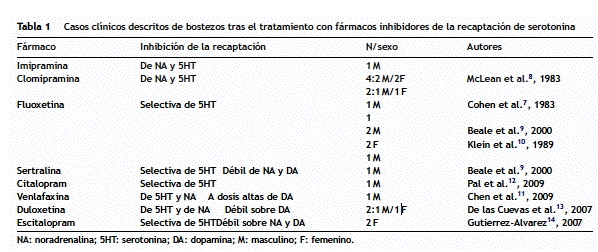
Excessive yawning has been observed for other
antidepressant drugs including clomipramine,
fluoxetine, citalopram, sertraline, and
paroxetine. To our knowledge, this is the first
report of duloxetine-induced disturbing and
disabling yawning.
CASE 1
The patient was a Spanish man approximately
50 years of age who began treatment of an
anxiety disorder with 60-mg duloxetine, taken
orally at breakfast. Cognitive behavioral
therapy was also prescribed. Three days after
drug treatment was initiated, the patient began
to yawn excessively during the day, despite
adequate sleep at night. The excessive yawning
was not accompanied by drowsiness, yet he was
unable to intentionally stop himself from
yawning. This secondary effect was described by
the patient as being uncomfortable and disabling
in his job as a teacher because the yawning
persisted while lecturing to his pupils. The
frequency of yawning was greater in the morning
than in the afternoon. His anxiety symptoms
disappeared after 4 weeks, but the treatment was
continued for 4 months with excessive daytime
yawning still occurring. His excessive yawning
was completely resolved when drug treatment
ended at week 18.
CASE 2
The patient was a 32-year-old Spanish woman
with symptoms consistent with a moderate
depressive disorder. Treatment included
cognitive behavioral therapy in combination with
60-mg duloxetine, taken orally at the main meal.
The patient reported excessive daytime yawning
after 1 week of treatment, yet treatment was
continued because the patient was on sick leave.
At 6 weeks, the patient's mood improved,
allowing her to return to the workplace. Three
days later, the patient noticed that the yawning
was disturbing and found the drug treatment very
disabling in her job as a driver. She
experienced yawning while sitting in traffic
jams, when driving with negligible traffic, and
when driving at night. The excessive yawning was
not accompanied by drowsiness and disappeared
completely once treatment with duloxetine was
terminated.
Yawning is a common physiological event that
occurs infrequently in humans and animals and is
usually, but not exclusively, triggered by
fatigue or boredom. It is characterized by
gaping accompanied by a long inspiration,
followed by a shorter expiration. Yawning
resembles classical reflexes because once
initiated, the specific pattern of motor output
associated with inspiration/ expiration is
completed with minimal influence by sensory
feedback. Currently, the physiological function
of yawning and the neurochemical mechanism by
which it occurs are not completely understood.
Research indicates that yawning is controlled by
several neurotransmitters and neuropeptides
including dopamine, excitatory amino acids,
acetylcholine, serotonin, nitric oxide,
adrenocorticotropic hormone-related peptides,
and oxytocin. gamma-aminobutyric acid,
noradrenaline, and neurotensin also influence
yawning. Occasionally, these chemicals interact
in the paraventricular nucleus of the
hypothalamus to facilitate or inhibit the
expression of this behavioral response. Based on
this information, it is possible that the
inhibition of reuptake of neuronal serotonin,
norepinephtine, and dopamine by duloxetine may
be responsible for the excessive yawning
described here. However, yawning usually does
not represent a secondary effect that
necessitates the termination of treatment, but
in the 2 cases reported here, its frequency and
intensity were disabling. Therefore, clinicians
should be aware that duloxetine may evoke
excessive daytime yawning that could be
disabling for some patients.